
You Can't Turn Corn Into Soybeans: Why Fighting Your Harvest Keeps You Stuck
I admit, I've spent a lot of years studying manifesting.
The law of attraction. The Secret. Neville Goddard. Joseph Murphy. Florence Scovel Shinn. If someone said there was a better way to imagine, feel, or align, I was probably reading about it by the weekend.
And here's the thing. Some of it worked. I'd get the parking spot, the unexpected check, or the conversation I'd been hoping for. But the big stuff? The things I felt I needed in order to be okay? Those were a lot harder to manifest on any kind of consistent basis.
So I started asking myself questions that I bet you've asked too. Am I doing it wrong? Is there a better technique? Do I need to find another teacher?
Kind of funny, but I'm beginning to think I've been asking the wrong questions all along.
And the answer isn't out there.
The Seed and the Harvest
Neville taught that the imagined act is a seed. You plant it, and eventually you reap the harvest.
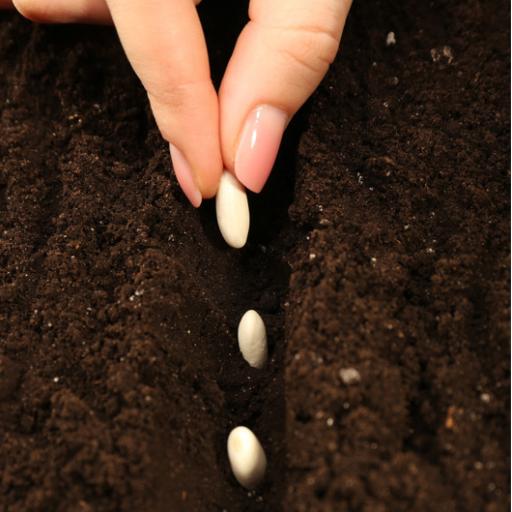
What we don't always notice is that we're planting all the time. Sometimes on purpose, when we sit down and imagine the life we want, but most of the time by default. Every worry we replay at 2 a.m., every "this always happens to me," and every old story we tell ourselves without even realizing we're telling it.
From this perspective, our current circumstances may reflect seeds planted long before we became conscious of what we were planting.
Now, I don't take that to mean we're responsible for every difficult thing that happens to us. But I do find it interesting to consider how much of our experience is shaped by beliefs and assumptions we've carried for years, especially when we spend so much energy fighting what we see growing around us.
Life as a Game of Limitation
This is where another perspective comes in. Stay with me here, because it gets interesting.
Robert Scheinfeld, in Busting Loose from the Money Game, describes life as we know it as a kind of hologram. A game. And the one who set up the game is the infinite part of us. Some people call it God. Some say the Universe, Source, or Creator. Use whatever word feels right to you.
Here's the idea I keep turning over in my head. If you're an infinite being, you can't experience limitation. It's not possible. So what does an infinite being do if it wants to know what limitation feels like?
It creates a game where limitation is the theme.
And guess what? That's exactly what this life feels like most days. Not enough time, not enough money, not enough energy. Just not enough.
Yet even when we're completely consumed by limitation, and most of us are, something still tugs at us. A quiet knowing that there's more. I suspect that's why we go to church, meditate, pray, read the books, and sign up for the courses. We sense there's something more to life than what we're experiencing.
The catch is that we tend to assume this "something more" lives outside of us. Up there, out there, or perhaps in the next teacher or technique.
I'm beginning to question that assumption.
Why Fixing the Hologram Is So Exhausting
Scheinfeld teaches that we are infinite beings with infinite power, but that power doesn't exist within the hologram itself. Inside the game, there's no power at all, although we spend much of our lives believing there is and chasing after it.
The power is within us. Not out there.
That wasn't a difficult concept for me to accept. I'd believed for years that we are infinite beings with infinite potential. But what did that really mean? And how did it translate into my everyday experience?
What I had a much harder time accepting was his take on manifestation. He questioned whether the law of attraction really works, and even challenged the existence of the subconscious mind.
I remember thinking he had it wrong. After all, I'd experienced things that seemed to confirm what I'd learned from Neville and other teachers.
But now I'm beginning to understand what he was getting at.
It's not necessarily that imagining and manifesting are bad or wrong. It's that so often we're using them because we've decided our current circumstances aren't okay. We want to fix something, change something, or get something we don't have, believing we'll finally feel better when we succeed.
I certainly spent a lot of time there.
Lately, though, I've been considering something else. What if the source of much of my discomfort isn't my circumstances, but my judgment of those circumstances?
That got me thinking about how much time we spend trying to change the harvest instead of recognizing it for what it is.
You Can't Turn Corn Into Soybeans
Picture a farmer standing in a field of corn. It's sprouted, it's tall, and it's grown. But she decides she actually wanted soybeans.
She can stand out there all day long, glaring at it, praying over it, visualizing over it, or rearranging the stalks. It's still going to be corn. That harvest was decided when the seeds went into the ground.
That's what so many of us are doing with our lives. We look at our current harvest, whether it's our bank account, relationships, or business, and pour enormous amounts of energy into wishing it were something else.
If you really want soybeans, plant soybeans.
And here's something else I've been realizing: You don't have to hate the corn to plant soybeans.
You can appreciate the corn that's already growing without pretending it's something else. You don't have to fight it, resent it, or spend your days wishing it were different. You can enjoy the harvest you have while deciding what you'd like to plant next.
That's the part I think a lot of us miss, me included.
Neville taught us to imagine it, feel it as real, and then let it go. Don't attach to the outcome or keep digging up the seeds to see if they're growing. Your harvest is on the way, inasmuch as "time" is a thing in this game.
In the meantime, there's a whole field of life to experience.
But why is it so difficult to appreciate the corn in the first place? I think it comes down to judgment. We've already decided that corn isn't what we want, and once we've made that decision, it's hard to see anything good about the field we're standing in.
The Soil: Appreciation Without Judgment
So what makes good soil for a new crop? I keep coming back to two things: appreciation and letting go of judgment.
I've started noticing just how much of my daily stream of consciousness is built around judgment.
I see trash on the ground and think, Why do people do that? Someone's spraying Roundup and I wonder, Don't they care about the environment? Someone's playing loud music. How inconsiderate. Someone's smoking. They should know better.
And on and on it goes. All day long.
It's kind of funny when you think about it. I'm walking around with all these opinions about how everyone else should behave, as if the world is ever going to cooperate with my preferences!
No wonder it's exhausting.
And that's just the judgment I direct toward other people. Think about how much of it we direct toward ourselves and our own circumstances.
We have beliefs, many of them formed in childhood, that inform what we consider good or bad, right or wrong, acceptable or unacceptable. When something gets labeled bad, we can spend an enormous amount of time replaying it, resisting it, and trying to fix it. We get caught in a loop, often without even realizing it.

What I'm discovering is that I don't have to participate in every judgment that comes into my mind. I can notice something without deciding it needs to be different.
When I do that, something shifts. I feel lighter, more energized, almost like I've gotten something back.
I want to be clear. This isn't giving up or saying, "Fine, whatever, this is my life now." It's not coming from defeat. It's simply allowing what is to be what is, without constantly arguing with it.
And I know some things that happen are really hard to accept. I'm not suggesting we pretend otherwise or stop taking action when something needs our attention. But there's a difference between taking action and spending our days mentally fighting something that's already happened.
I'm learning that distinction.
What Appreciation Looks Like on a Tuesday

Appreciation doesn't have to be fancy. It can be as simple as:
Appreciating the electric bill because you get to flip a switch and have light.
Appreciating the water bill because clean water comes right out of the faucet.
Appreciating a compliment instead of brushing it off.
Appreciating money coming in and money going out.
Coming and going. It's all part of the experience.
The more I appreciate these ordinary things, the more I realize how much of life I've spent overlooking while waiting for something better to happen.
The funny thing is, I haven't stopped wanting things. I still have desires, I still imagine possibilities, and there are experiences I'd love to have. But I'm no longer depending on those things to make my life okay.
I'm beginning to enjoy the life I'm already living.
When a new desire comes along, I'm less likely to approach it from a place of needing something to change so I can finally feel better. I can simply enjoy the possibility of experiencing something new.
What Happens When You Stop Fighting the Harvest
Here's what I've noticed. Maybe you'll notice it too.
Even if nothing else in your life changes, you just feel better. That alone is worth it.
But I think it goes deeper. When I'm not spending so much energy judging what is, I have more energy for living. I'm more open to new ideas, more willing to take action on something I've been putting off, and less concerned about whether everything will work out exactly the way I imagined.
I'm also realizing something that seems so obvious now. The car, the house, the money, whatever it was I thought I needed, wasn't necessarily what I was after.
I wanted how I thought those things would make me feel.
Freedom, joy, peace, and the ability to enjoy my life.
I'm discovering that I don't have to wait for those things to arrive before I can experience more of that. There's nothing wrong with wanting a beautiful home, a new car, or more money. I'll enjoy those things if they become part of my experience, but I can also enjoy what I have right now.
I don't have to wait for a different harvest to enjoy the one I have.
And I can still plant soybeans.
So here's my question for you. What harvest are you standing in right now, trying to turn into something it's not? And what might happen if you stopped fighting it, appreciated what you could, and planted something new?
Ready to Plant Something New Around Money?
Explore Your Money Consciousness
What if changing your relationship with money begins with changing how you see it?
In Money Consciousness, Niko Ana Jeanne brings Charles F. Haanel's timeless teachings on abundance into the present, exploring how our beliefs, childhood conditioning, and relationship with money shape what we experience.
Discover a different perspective on abundance through an ebook, audiobook, and guided money activation.