I’ll Jump Over Fire for Fun, but Please Don’t Make Me Pack
I’ve noticed something about myself that doesn’t quite add up.
Between 2013 and 2019, I’ve completed seven Spartan races. If you’re not familiar with them, they’re obstacle course races where you run for miles, climb walls and ropes, crawl through mud, swim through ponds, and do burpees every time you fail an obstacle. I love them.
I also dread moving. Not exercise. I mean moving from one house to another. Packing, taping boxes, lifting heavy things. Just thinking about it makes me tired.
One of these is clearly harder than the other, and it isn’t the one I dread.
My First Spartan Race
At the time I raced, Spartan offered three distances. The Sprint was 3 to 5 miles, the Super was 8 to 12, and the Beast was 12 to 15, each with its own number of obstacles. Things may have changed since then.
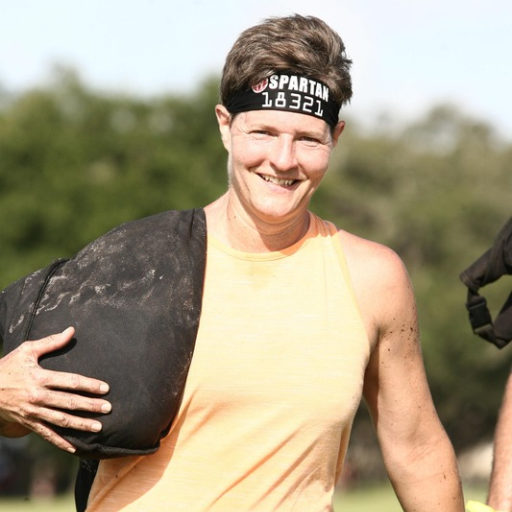
My first race was a Super in 2013, because I didn’t know an easier one existed.
It was hard. More miles meant more obstacles, and more obstacles meant more burpees. I had leg cramps during the race. Afterward I came down with what people call the Spartan rash, possibly from a combination of poison ivy and a parasite in the pond water we swam through. I ended up getting a cortisone shot, and I never go to the doctor.
The next year, I signed up for the same race. Same mud, same swim, same everything.
Burpees, Fire, and a 40-Foot Rope
When I raced, the rule was simple. If you missed an obstacle, fell off it, or failed it in some way, you owed 30 burpees.
Everybody hates burpees. But it was the honor system. Nobody stood over you counting. You could have skipped them, and who would know?
One of the obstacles was a 40-foot rope. I had never climbed a 40-foot rope. I didn’t know how, and I didn’t know how I was going to get up it. I started anyway, and I got up it.
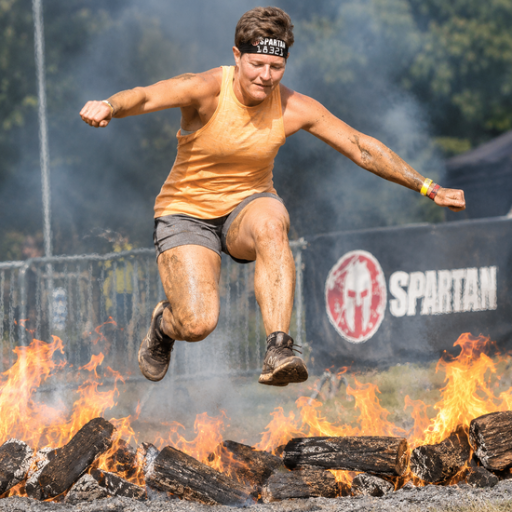
At the finish, we jumped over a pit of fire and collapsed on the ground. You’d think after an experience like that, I’d never do it again.
Nope. I’d do it again. I’d pay hundreds of dollars, sign a death waiver, get up at 3 a.m. to drive to the event, and wait around for hours in a crowd for my start time. Then I’d go, and about two hours later, I’d finish.
Now that’s fun.
Then There’s My Business
In my business, there are tasks I find hard. Most of them aren’t physical. They’re technical.
When I run into one, a familiar voice shows up. I don’t know enough. Tech is overwhelming. I don’t know how to do that. Then I put it off, or avoid it, or get frustrated before I’ve really tried.
Here’s what struck me. I didn’t know how to climb that rope, either. On the course, not knowing how was part of the adventure. In my business, not knowing how turns into resistance.
So what was different?
I’d like to say it’s because business tasks are harder. They aren’t. And packing isn’t harder than a Super Spartan, either. It’s not even close.

Certainly, there are differences between running an obstacle course and moving house. I chose to do Spartan races, and they came with adventure, camaraderie, and a sense of accomplishment. Moving usually comes with responsibilities and deadlines. But considering the amount of physical discomfort I was willing to put myself through for fun, I don’t think difficulty is what’s creating my resistance. I think it has more to do with what I’ve decided about the experience.
I had decided Spartan races were fun, so I was willing to put up with a lot of discomfort, and I actually looked forward to it. I’ve decided packing is miserable, so I’m resisting it before I’ve even picked up a box. And I’ve decided technology is overwhelming, so it feels that way before I’ve even started.
It’s almost like I’ve placed an overlay on the experience. One says fun. The other says this is going to be awful. Whichever one I’ve chosen seems to decide how hard something feels, more than the thing itself.
Labels Everywhere
Once I noticed I was doing this with races and boxes, I started noticing how often I do it with everything else.
I like this. I don’t like that. She’s this, and he’s that. Why are they doing it that way? Why don’t they just do it this way?
If I let it go unchecked, I’m not sure a minute goes by without some kind of judgment.
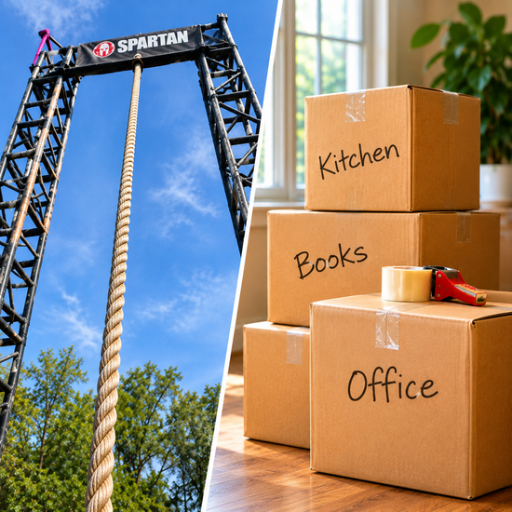
The rope was just a rope, and the box is just a box. I’m the one deciding what each of them means. And when I think about how many times a day I’m deciding what something means, it starts to look like judgment is the glue that holds this illusion of life in place. It’s what makes my version of things feel so solid and so real, including my belief that some things are fun and some things are impossible.
Don’t Just Make It Fun
The obvious answer would be to make packing fun. Put on some music, turn it into a game, reward myself afterward.
There’s nothing wrong with that, and sometimes it may even help. But it’s really just swapping one judgment for another. I’d be trading “packing is miserable” for “packing is fun,” and the overlay would still be there.
If I’m honest, that’s exactly what happened with the rope. I didn’t climb it without an overlay. I’d already placed the overlay of fun and adventure on the whole Spartan experience, and that positive judgment let me approach something unfamiliar without much resistance.
What I’m curious about now is whether I could bring that same willingness to other things without needing to decide first that they’re fun. What happens when I don’t need to judge the experience at all?
Can I pack a box without needing to have an opinion about packing boxes? Can I sit down with a technical challenge without first deciding that technology is overwhelming?
I find that question a lot more interesting than trying to talk myself into liking packing.
Excess Importance
There’s a concept in Reality Transurfing that has helped me think about this. It’s called excess importance, and it’s one of the most valuable ideas I’ve taken from that book.
The way I understand it, the problem isn’t having a preference. I prefer camping to packing boxes, and I’m not going to pretend otherwise. We can still have preferences, and we can still enjoy things. I don’t think any of us need to force ourselves to enjoy everything.
The trouble is the extra weight I put on top: the significance, the emotional energy, the story about how awful or how important something is. That’s what turns a box of dishes into something I dread.
It works in both directions, too. I can load something with importance by deciding it’s wonderful just as easily as by deciding it’s terrible. And a lot of us spend a good deal of time mulling over the things we don’t want, which only adds more weight and breeds negativity.
I don’t think I can stop judging completely, so I’m practicing something smaller. When I notice I’m judging something, I pause and ask where that judgment came from. Usually it’s a belief I picked up along the way. Then I work on releasing it, or at least loosening its grip, whether I’ve decided the thing is good or bad.
Maybe “I don’t know enough” is one of those beliefs. On the rope, I didn’t know enough either, and it wasn’t even a problem.
If I don’t judge things so much and can find that place of balance, maybe I can do what I want or need to do without all the suffering.
Where in your life have you decided something is too hard? And what are you doing, maybe even happily, that other people would call insane?
I’m still working on this one. Who would have thought a pit of fire and a pile of burpees could explain so much about packing?
What Hidden Patterns Are Running Your Life?
The judgments I’ve been talking about, like “this is too hard” or “I don’t know enough,” often run quietly in the background. I didn’t notice mine until a rope and a stack of boxes put them side by side. Many of the ways we move through life are driven by beliefs and patterns we’re not even aware of.
Recognizing those patterns can be the first step toward experiencing more ease and actually enjoying life.
Curious about what might be running beneath the surface of your own life? Take our free interactive quiz and discover what your patterns may be revealing.